Why Stillness Matters in a World That Worships Productivity
By Anjelica Smilovitis
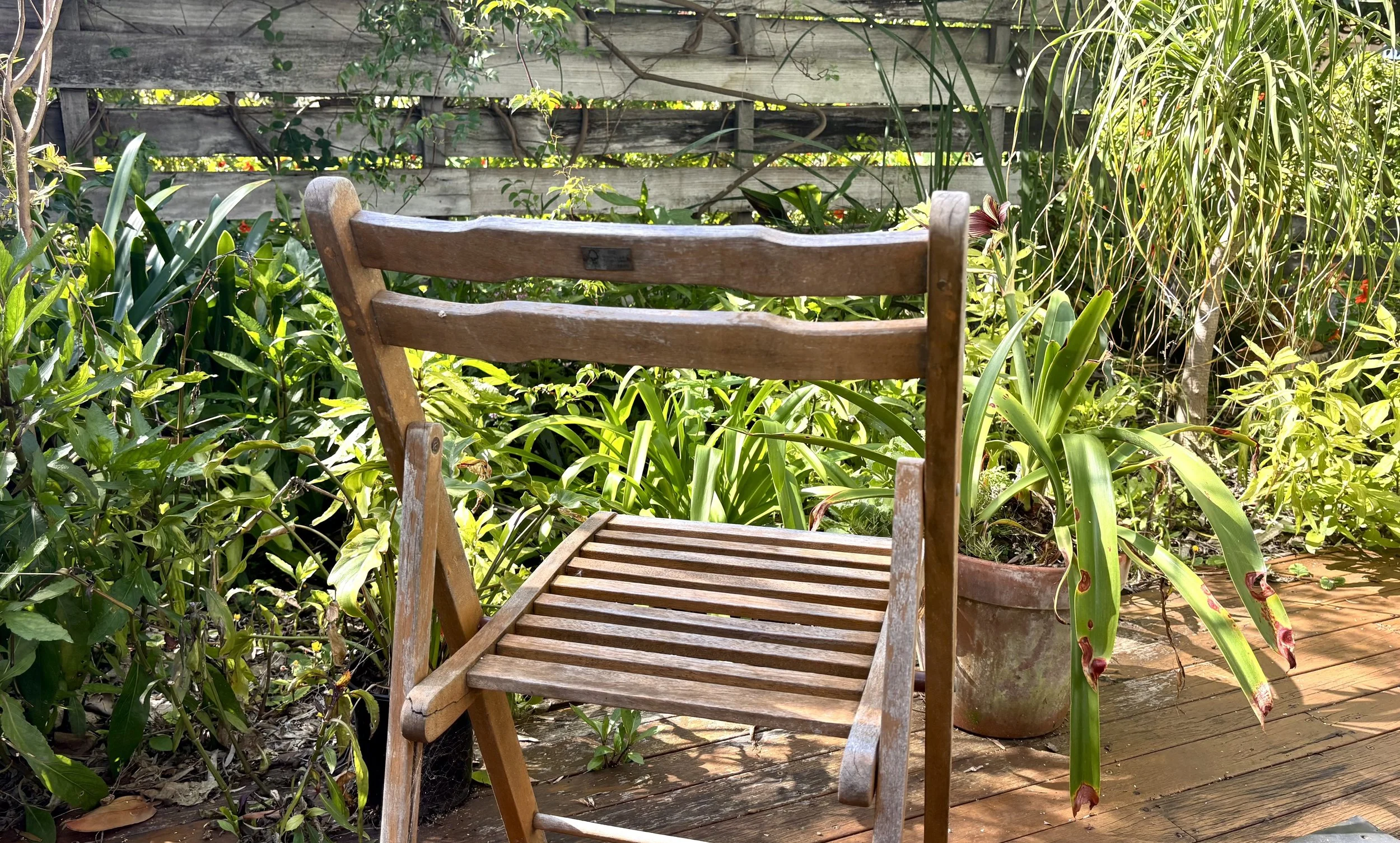
Let’s linger a little longer.
I’d love to invite you, for one minute, to sit here and do absolutely nothing before you read this article. No phone. No distractions. Just wherever you are, 60 seconds to be. I’ll share why in a moment.
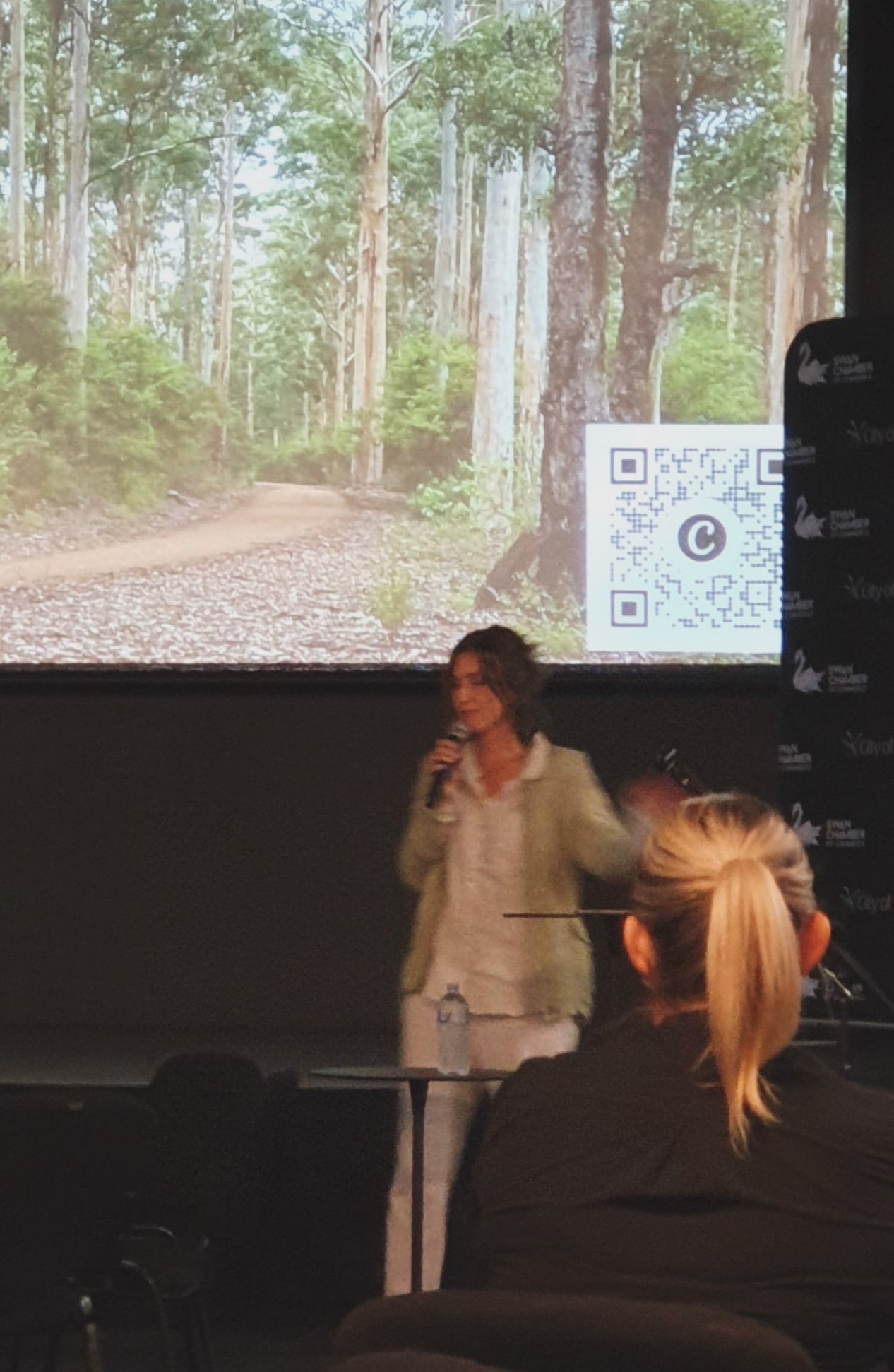
Talking about stillness with Swan Chamber of Commerce Western Australia for Hour of Power alongside Swan Christian Education Association executive principal Darnelle Pretorius.
I was around 27 years old, about 12 years ago now, when I visited our family doctor. He was someone we trusted to give it to us straight, and a really great doctor when it came to healthy living.
I shared with him that I felt nothing. It was as though my mind was constantly hitting a brick wall. I felt no joy, no sadness, nothing. I just didn’t feel like myself.
He asked me to describe my lifestyle to him.
Okay, I thought. I’d wake up at 4 am to train clients. I was a personal trainer at the time. Then, in the middle of the day, I’d study. I was doing a degree in psychological sciences, and it was full-on. In the afternoon, I’d start training clients again and continue into the evening.
And on and on I went. Marketing, training myself every day somewhere in there, you name it. As I spoke, I thought my never ending list of things to do was normal.
And then he asked me a question.
“Okay…so, when do you relax?”
Now, if he’d asked me that question years earlier, I probably would have thought, Relax? Relax? What does this guy know about success? Hard work?
I’d grown up around a work culture, particularly in real estate, where success meant working six or seven days a week, working nights and answering the phone at all hours. Being constantly productive.
And it wasn’t just a one-off experience. From a young age, even in church, I’d learnt that to serve, to be a Christian, we needed to constantly be on the go. Attending church, serving others non-stop to “save them from hell”, and giving of ourselves no matter how exhausted we were.
Doing, doing, doing.
But in that moment, sitting there with Doc, I remember feeling tears start to well up. And remember, my mind at the time was quite numb. I felt my body drop a little, almost like, You mean, I don’t have to be on all the time?
As he talked to me about the importance of relaxation, and what he called leisure, I felt as though I was being given permission to take a breather.
He recommended that I take one hour a day for a “holiday”. Those were his words.
If you think about what a holiday is meant to be, hopefully, it’s a time to step away from your usual routine and relax, be present in the moment, and go with the flow of the day. That was essentially what he was prescribing. But every day, as part of my normal life, for at least one hour.
I think he probably had an inkling I wouldn’t be able to handle much more at that time. But, if a doctor was making that suggestion, there must be something to it.
So, I went back to my life and decided, I'm going to start with 20 minutes a day. Looks like Doc had me right.
For some reason, I had this wild idea that I wouldn’t just do something leisurely. I would do absolutely … nothing.
Not a thing.
Twenty minutes a day, usually around lunchtime, I started sitting outside on the lawn, with no phone and no distractions—just… sitting there daily.
And I remember finding it absolutely … mortifying.
I can still remember the thoughts that would come up. What a waste of time. This isn’t productive.
And then the guilt. The feeling of being lazy.
Twenty minutes… doing nothing?

Speaking alongside Swan Christian Education Association executive principal Darnelle Pretorius at October 2026 Swan Chamber of Commerce Western Australia, Hour of Power.
Over time, this evolved into a deliberate practice. I also started hiking in the Perth Hills as often as I could on weekends.
And again, because I was stepping away from my usual routine, just to go for a walk in the bush, all those thoughts would come up.
The stress from the week would be loud. The list of things to do would start yelling at me. If I didn’t get everything done, somehow, I was a failure.
And worst of all… I might fall behind in life.
Probably one of the funniest things in hindsight, although it certainly wasn’t funny at the time, was that I actually started to enjoy what I was discovering.
The quiet. The creativity. The problem-solving. The room to think and contemplate.
Less pressure to perform all the time. And a greater connection with my spirit.
And I remember thinking back then, I might like this so much that I end up becoming a really lazy person.
Honestly, that was one of my greatest fears that came to light during this time: being viewed as lazy.
Beyond that, I feared that if I became lazy, if I stopped achieving things, I would become insignificant—a nobody. Worse still, I feared I would no longer be of service to others or be able to help people.
And look, we’re all different. What comes up for me will be different from what comes up for you, or for someone else.
But what this experience showed me was that inviting stillness into my life, creating space for quiet, even boredom, gave me the opportunity to look at the voices that were running the show.
It revealed belief systems and patterns of thinking fuelled by fear, anxiety and even panic, despite the fact that, on the surface, I might have looked like I was gliding along successfully.
I started to recognise how much of the way I was operating was driven by other people’s opinions and expectations, and by what everyone else seemed to be doing or claiming was “success”.
When we hear those messages often enough, it can become difficult to distinguish between the noise around us, our own voice and what we believe is right for us.
It can even squeeze out the voice of God, our spirit and our ability to hear our soul.
Unravelling that fear has involved many layers, and much of it is personal to me. But one of those fears was that everyone else’s voice was right, and mine might not be.
That to be successful, I had to listen to the culture around me, to what the majority of people deemed to be success, even if it meant running myself into the ground.
And I think this is particularly relevant today, with social media, a world of information at our fingertips, and ChatGPT giving us a whole range of ideas and solutions before we’ve even had the chance to sit with a question or curiosity ourselves.
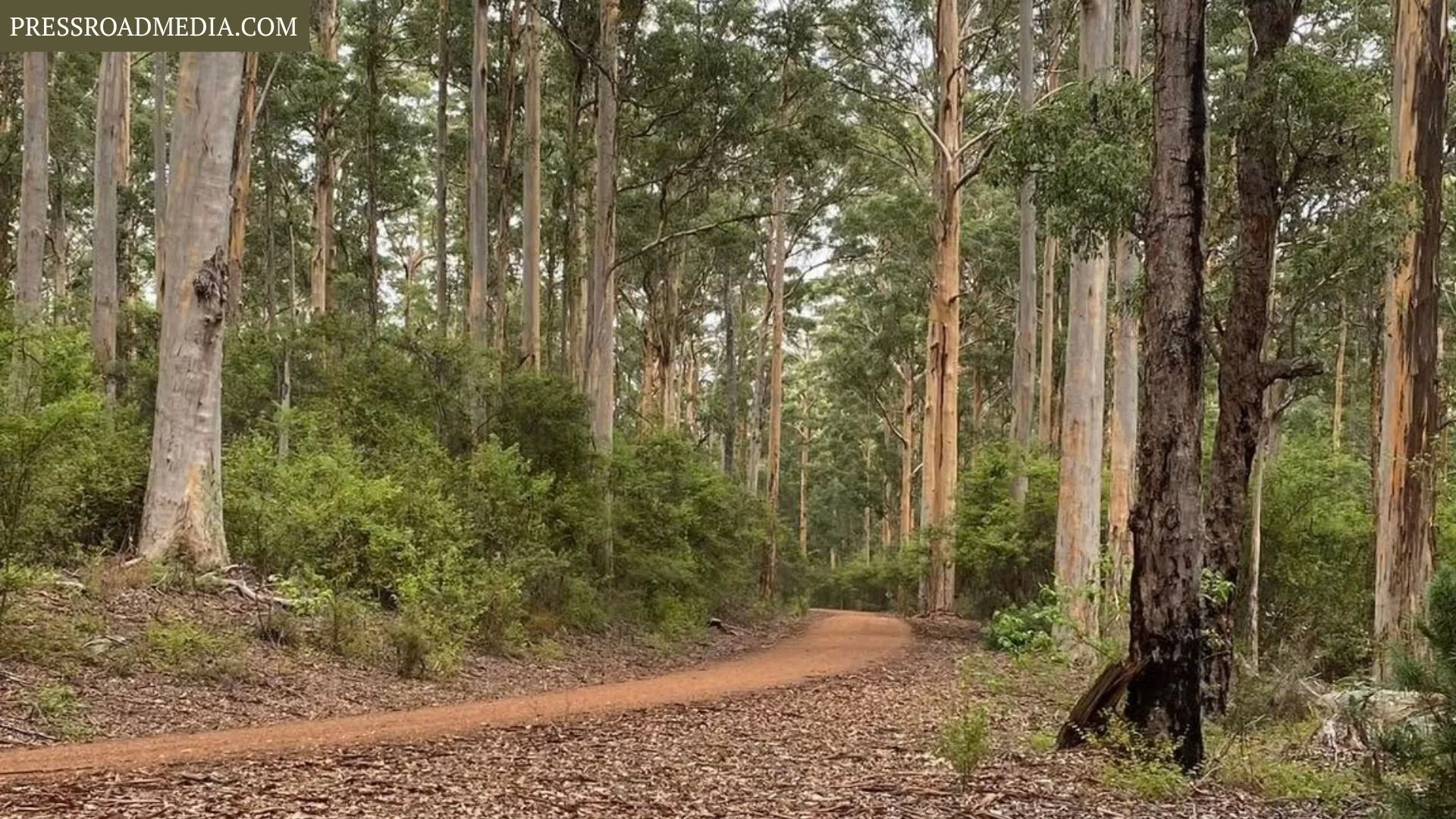
Donnelly River in Western Australia. Credit: Anjelica Smilovitis of Press Road Media.
Why Boredom is healthy
I think back to when we were kids. We’d whinge to our parents, “I’m boredddd!” And they’d say, “Go outside and play!”
Within no time, my brother, sister and I would be out creating our own games, involving the neighbourhood kids and finding ways to entertain ourselves.
Somewhere in that boredom, creativity happened. Problem-solving happened. Imagination. Curiosity. And it ended up being incredibly fun for us.
I wonder whether, as adults, we’ve become so accustomed to filling every quiet moment that we’ve lost some of that space. The moment we feel bored, uncertain or stuck, we reach for our phones, look for distractions or fill our time under the guise of productivity.
But what if that space is an opportunity?
What if, rather than immediately looking outside ourselves for the next answer, the next distraction or the next thing on our list, we allowed ourselves to sit a little longer?
To contemplate whether what we’re doing is actually good for us, our work, our business, our relationships, our family—and our lives as a whole?
And what comes up will be different at different seasons of our lives. Sometimes, it might be an opportunity to create something new. Other times, it might bring us face to face with something we’ve been avoiding, whether that’s grief, pain, fear or anxiety.
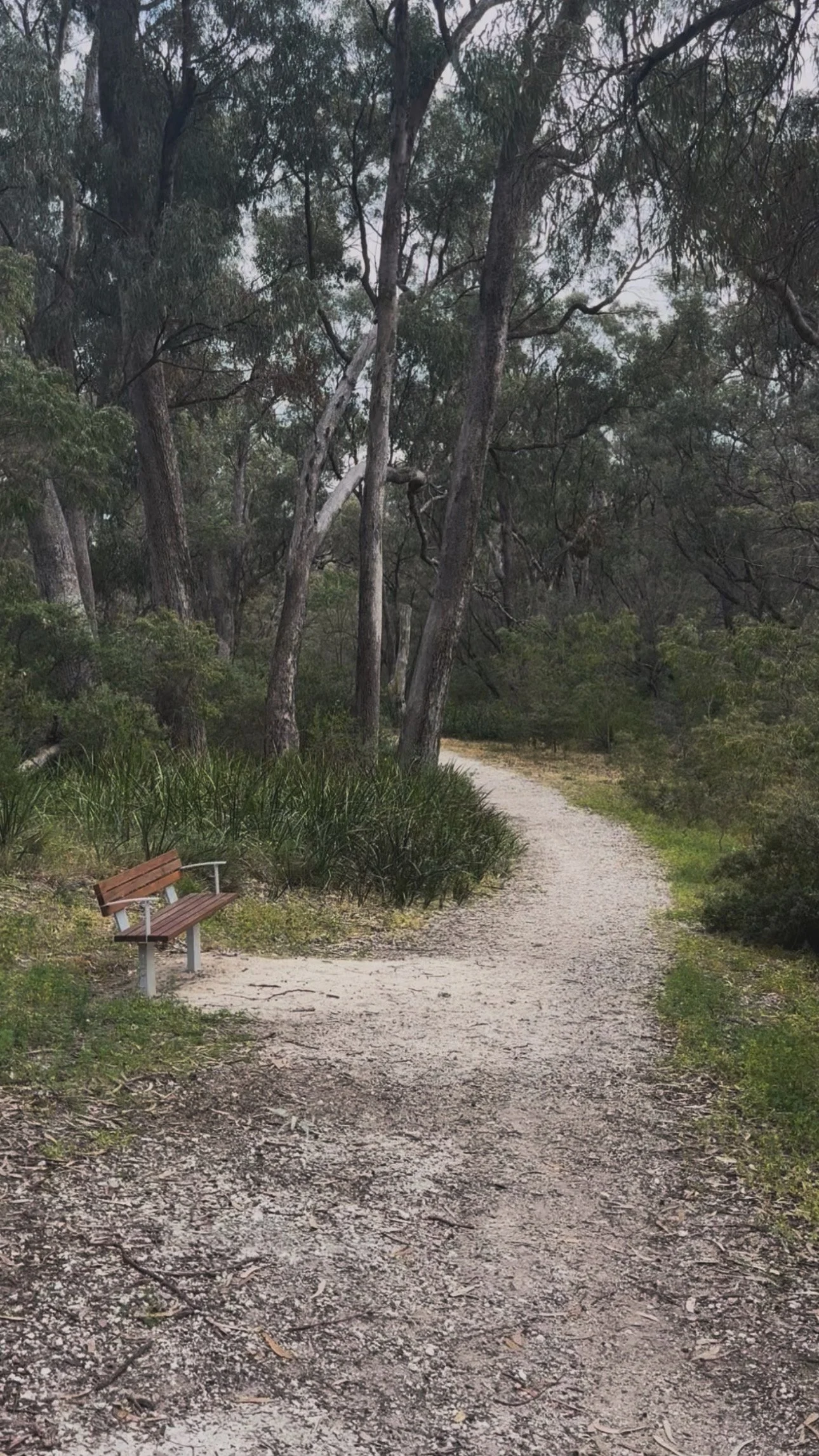
Why not take a little longer to linger in this moment? Bunbury, Western Australia. Credit: Anjelica Smilovitis of Press Road Media
The Quiet Work of Doing Nothing
When I first started taking a breather, part of me was afraid that if I stopped, my whole life would stop with me.
But by allowing boredom, silence and stillness into my life, I began to confront those fears rather than keep running from them.
What started out as rest, back when Doc recommended an hour of leisure, gradually became an invitation to walk a path of my own, and to have the confidence to listen to my own voice and spirit as I worked out what I wanted from life.
That space gave me the opportunity to shine a light on my fears and, slowly, take away some of their power.
From where I stand today, after more than a decade, what started as a need for relief and relaxation has become something much deeper.
It’s helped me cultivate a healthier business and lifestyle, while proving to myself that we don’t need to work non-stop to be successful professionally.
But more importantly, stillness has become a core value of Press Road Media and the way I work with brands, businesses and organisations. I help people move away from the belief that they need to be on every platform, publish more content or constantly chase the next trend to succeed.
Instead, I work with people and teams to bring back the joy of creativity, make space for considered thinking and build more sustainable ways of working.
That also means making room for the human side of business. Sitting with directors, business owners and teams as they navigate the pressures that come with running an organisation: financial uncertainty, the fear of falling behind, the responsibility of leading others, the pressure to make the right decisions and the desire to see their hard work pay off.
Rather than rushing to another strategy or solution, we take the time to understand what's driving those pressures, what matters most and what the business actually needs to move forward.
By bringing that same practice of stillness into the way we work, we create room for clearer decision-making, more thoughtful strategies and better-quality work. Over time, it becomes an ecosystem where creativity can flourish, people can reconnect with what they love doing, and businesses can grow in ways that are both meaningful and sustainable.
What I love about this approach is that it creates room to breathe.
It allows us to develop strategies that suit each individual business, in ways that are sustainable and leave room for creativity.
Because sometimes, the space we think is taking us away from our work is exactly what helps us return to it with greater clarity, creativity and purpose.
I’m not suggesting that success doesn’t require hard work, commitment or responsibility. Of course it does.
But I do think we need to question the idea that being constantly busy is proof that we’re doing well.
What might become possible if we stopped treating rest as something we earn only after we’ve done enough and started seeing it as something that helps us do our best work in the first place?
What if, over time, busyness and stress have been woven into our lives to the point that they’ve become normalised, and leisure, rest or stillness have become such fearful things to pursue or invite in?
For me, it began with a conversation with a doctor, more than a decade ago, who asked me a very simple question.
“When do you relax?”
Today, that question continues to shape how I live, how I work and how I help others build their businesses.
And perhaps it’s a question worth asking ourselves, too.
When do we give ourselves the space to think, to listen, to reflect and to work out whether the way we’re operating is actually working for us?
Whether you’re leading a team, running a business, building a career or simply trying to keep up with the demands of everyday life, I’d encourage you to experiment with creating a little more space.
You don’t need to start with an hour. You don’t even need to start with twenty minutes.
Perhaps it’s five minutes sitting quietly, going for a walk without your phone, or allowing yourself to pause without immediately reaching for the next thing on your to-do list.
So, I’d love to bring us back to where we started.
One minute.
No phones. No distractions. Nothing to achieve.
Just a moment to be.
A note on this piece: Some of the reflections and ideas in this article were first shared in a speech I delivered to the Swan Chamber of Commerce Western Australia for Hour of Power alongside Swan Christian Education Association executive principal Darnelle Pretorius on 14 October 2026. The article has since been developed for publication.